
Frontend Performance and Core Web Vitals: Practical Guide for Developers
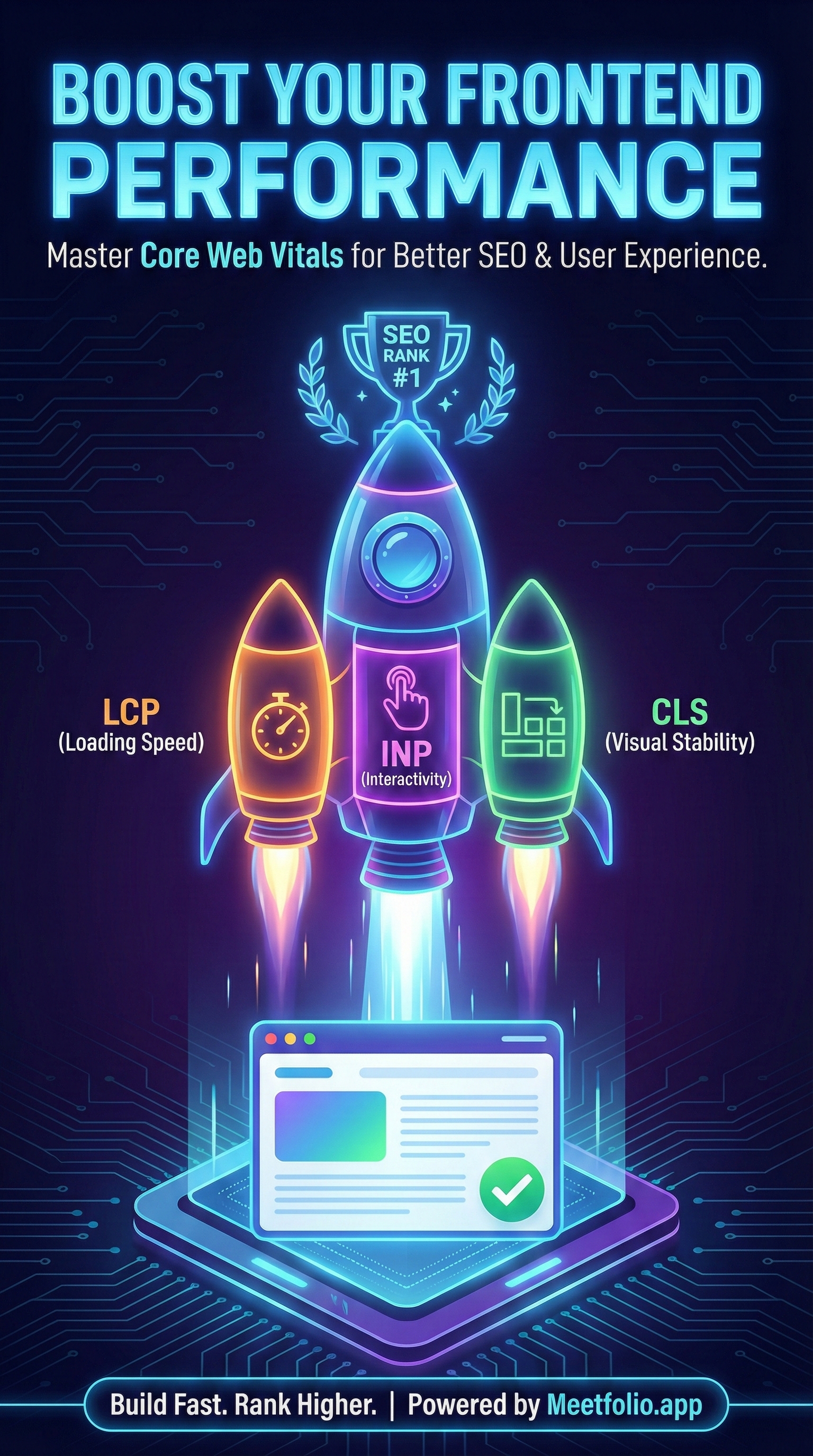
Frontend performance is no longer just about delivering a smooth user experience—it is a critical factor for SEO rankings and user retention. To quantify web performance, Google introduced Core Web Vitals, a set of specific metrics that measure the real-world user experience for loading speed, interactivity, and visual stability.
What Are Google Core Web Vitals?
Core Web Vitals currently consist of three primary metrics. Understanding and optimizing these is essential for modern web development:
- Largest Contentful Paint (LCP) - Measures Loading Performance: LCP marks the time it takes for the largest visible element (like a hero image or text block) in the viewport to fully render.
- Target: A good LCP score is under 2.5 seconds.
- Interaction to Next Paint (INP) - Measures Interactivity: Note: INP officially replaced First Input Delay (FID) in March 2024. INP measures the overall responsiveness of a page to user interactions (clicks, taps, and keyboard inputs) throughout the entire lifespan of the user's visit.
- Target: A good INP score is under 200 milliseconds.
- Cumulative Layout Shift (CLS) - Measures Visual Stability: CLS calculates unexpected layout shifts that occur during page load (e.g., buttons moving just as you try to click them).
- Target: A good CLS score is less than 0.1.
Why Frontend Performance Matters for SEO
Fast, responsive websites directly improve user satisfaction and drastically reduce bounce rates. Because Google uses Core Web Vitals as an official ranking signal, failing to meet these benchmarks can result in lower search engine visibility, directly impacting your traffic and conversions.
Actionable Tips to Improve Core Web Vitals
How to Optimize Largest Contentful Paint (LCP)
- Implement aggressive caching to drastically reduce server response times (TTFB).
- Lazy-load below-the-fold images and videos so the browser prioritizes visible content first.
- Minimize and defer render-blocking resources such as bulky CSS and JavaScript files.
- Preload critical assets like main fonts and hero images.
How to Reduce Interaction to Next Paint (INP)
- Minimize JavaScript execution time by code-splitting and deferring non-critical scripts.
- Break up Long Tasks so the main thread isn't blocked, allowing the browser to respond to user inputs immediately.
- Use Web Workers to offload heavy background computations away from the main thread.
How to Improve Cumulative Layout Shift (CLS)
- Set explicit width and height attributes for all images, iframes, and videos to reserve DOM space before they load.
- Never insert dynamic content above existing content (like banners or ads) without reserving the layout space first.
- Rely on CSS
transformanimations instead of animating properties that trigger layout changes (likewidthortop).
Best Tools to Measure Core Web Vitals
To effectively monitor and optimize your frontend performance, rely on these industry-standard tools:
- Google PageSpeed Insights: Provides a mix of lab data and real-world field data, along with actionable fix suggestions.
- Lighthouse: A built-in Chrome DevTools auditor for running localized performance tests.
- Google Search Console: Essential for tracking how your Core Web Vitals perform across your entire site over time.
- Web Vitals Chrome Extension: Perfect for debugging and displaying real-time metrics as you browse.
Conclusion
Mastering frontend performance through Core Web Vitals (LCP, INP, and CLS) is mandatory for developers and businesses who want to rank higher on Google and provide a frictionless user experience. By integrating performance budgets and CI/CD automated testing into your workflow, you can prevent regressions and maintain a lightning-fast site.
Want a high-performance web presence without the hassle? If you need to showcase your professional skills or business online but don't want to worry about manual performance optimization, try Meetfolio. Meetfolio is a lightning-fast, highly optimized platform to create personal business card pages complete with an integrated booking calendar. Simple, fast, and effective. Visit Meetfolio.app to get started today.